Showing Posts From
Diagnosis

- Editor
- 01 Apr, 2026
Tests and Lab Costs for Klinefelter Syndrome in India
Key Takeaways: Initial Screening: Standard hormone blood panels usually cost between ₹1,500 and ₹3,000. Confirmation Test: A karyotype test ranges from ₹2,500 to ₹5,000 at private labs. Public Healthcare: Government institutions offer heavily subsidized or free diagnostic options.If you have just been diagnosed with Klinefelter Syndrome or suspect you might have it, one of the first practical questions is: what tests do I actually need, and how much will they cost? This guide answers both questions clearly and completely. The guide is organized into three sections that map to where you are in the process. If you have never been tested at all, start at the top. If you already have a diagnosis and your doctor has ordered baseline tests, jump to that section. If you are already on treatment and need to know what gets monitored and why, scroll to the monitoring section. Every cost in this guide is based on Indian pricing as of early 2026. Government hospital rates and private lab rates are listed separately because the difference can be significant. Why Tests Matter in Klinefelter Syndrome Tests serve two essential purposes in KS. First, they confirm the diagnosis. There is no other way to definitively identify Klinefelter Syndrome than through specific laboratory testing. Second, they establish your baseline and guide treatment decisions. Your doctor cannot prescribe testosterone replacement therapy, assess fertility potential, or monitor for long-term health risks without test results[1]. Understanding what each test measures and why it is ordered removes the guesswork and helps you have more informed conversations with your doctor. Read more in the First 90 Days After Diagnosis article. Phase 1 - Diagnostic Tests: Confirming Klinefelter Syndrome These are the tests that establish whether you have KS. If you have already been diagnosed, you have already had most or all of these done. The Karyotype Test This is the single most important test for Klinefelter Syndrome. A karyotype is a detailed analysis of your chromosomes taken from a blood sample. The lab grows cells from your blood over several days, then photographs and arranges your chromosomes under a microscope. If the result shows 47,XXY - meaning 47 chromosomes with two X chromosomes and one Y - that confirms Klinefelter Syndrome[1]. A standard karyotype reveals the full chromosomal pattern. Some men with KS have a mosaic pattern, meaning some cells are 47,XXY and others are 46,XY, which is the typical male pattern. Mosaic KS generally presents with milder symptoms and better hormonal function than non-mosaic KS, though this varies significantly between individuals[4].Test Type Estimated Cost Range (₹) Typical TurnaroundBlood Karyotype Test 1,500-8,000 2-14 daysThe karyotype is a one-time test. Once confirmed, you never need to repeat it. Hormonal Blood Tests (Initial Screening) Before a karyotype is ordered, most men with KS are first flagged through routine blood work that shows a characteristic hormonal pattern. This pattern (low testosterone combined with elevated LH and FSH) is a strong indicator that a karyotype should be done[4]. Your doctor may have ordered these as part of investigating infertility, fatigue, or another symptom. The key hormones tested at this stage include:Total Testosterone: Measures the overall amount of testosterone in your blood. In KS, testosterone tends to be low or low-normal. Luteinizing Hormone (LH): The pituitary signal to the testes to produce testosterone. This is typically elevated in KS as the body tries to stimulate the testes. Follicle-Stimulating Hormone (FSH): The pituitary signal related to sperm production. This is typically elevated in KS as well.Many private labs offer a bundled "Male Hormone Panel" that includes these tests. Ask specifically for this when booking. The complete initial hormonal screening panel typically ranges from ₹1,000 to ₹2,500. Semen Analysis If fertility is a concern (infertility is one of the most common reasons KS gets diagnosed in the first place), a semen analysis is typically ordered alongside or shortly after hormonal testing. This test measures sperm count, movement, and shape. Most men with KS have azoospermia, which means zero sperm in the ejaculate, though some produce small amounts of sperm. A semen analysis typically ranges from ₹500 to ₹1,200 depending on the laboratory. Read more in the Fertility Options for Klinefelter Syndrome article. Phase 2 - Baseline Tests: After Diagnosis Once KS is confirmed, your doctor will order a comprehensive set of baseline tests. These establish where your body stands right now before any treatment begins. Every number becomes a reference point for future monitoring. This is the phase where testing is most detailed, so planning ahead helps.Test What It Measures Why It Matters in KS Estimated Cost (₹)Total Testosterone Overall testosterone level Primary treatment decision driver 300-800Free Testosterone Testosterone available to cells More accurate than total alone 400-1,000LH Pituitary signal to testes Confirms hypergonadotropic hypogonadism 300-800FSH Pituitary signal to testes Elevated in KS; guides fertility 300-800Estradiol Estrogen level Critical for bone health 300-800CBC Red/white blood cells, platelets Baseline before TRT 200-500Liver Function Liver enzyme levels Baseline before any medication 300-700Vitamin D Vitamin D level Often low in KS; affects bone health 250-600Lipid Profile Cholesterol, triglycerides, HDL, LDL Cardiovascular risk monitoring 300-700Fasting Blood Sugar Blood glucose level Elevated diabetes risk in KS 100-300DEXA Scan (Bone Density) This is not a blood test but rather an imaging scan that measures bone mineral density, typically at the hip and spine. Research consistently shows that men with KS have lower bone density than the general male population, driven by low estradiol levels over time[3][5]. A DEXA scan establishes your bone health baseline so that any decline can be caught and addressed early. A DEXA scan is typically performed at a hospital or major diagnostic imaging center rather than at a standalone routine pathology lab. The cost typically ranges from ₹1,500 to ₹4,000. Phase 3 - Monitoring Tests: During Treatment Once you are on testosterone replacement therapy or any other ongoing management, certain tests need to be repeated at regular intervals. These are not optional. They are how your doctor ensures treatment is working and is not causing harm.Test Why It's Monitored How Often What to Watch ForTotal Testosterone Confirm TRT reaching target levels Every 3-6 months Target: 400-700 ng/dLCBC (Hematocrit) TRT increases red blood cell production Every 3-6 months Hematocrit above 52% is red flagLiver Function Oral testosterone affects liver Every 6 months Elevated ALT or ASTLipid Profile Cardiovascular risk monitoring Every 6-12 months Watch triglycerides and HDLEstradiol Bone health and hormone balance Every 6 months Should stay in healthy rangeVitamin D Ongoing bone health Every 6-12 months Adjust supplement dose if lowFasting Blood Sugar / HbA1c Diabetes risk monitoring Annually Early detection of insulin resistanceDEXA Scan Bone density trend over time Every 2-3 years Compare against baselineRoutine monitoring is essential to ensure that your treatment remains safe and effective over your lifetime. Ongoing annual monitoring tests typically range from ₹2,000 to ₹6,000 per year, depending on the frequency of follow-ups. Read more in the TRT Complete Guide. Where to Get Tested in India You have three main options, each with trade-offs worth understanding. Government hospital labs are the most economical option. The trade-off is longer wait times for results (typically 7 to 14 days for karyotype, 2 to 3 days for blood tests) and sometimes less convenient booking. If cost is a priority and you are not in a rush, government labs are perfectly reliable for all the tests listed here. National chain labs such as Dr. Lal PathLabs, SRL Diagnostics, Metropolis, and Thyrocare offer a middle ground. Results are typically faster at 2 to 5 days, and you can book online or through apps. Home sample collection is available from most of these labs, which removes the need to visit a center. These are trusted, accredited labs used routinely by doctors across India. Hospital-based private labs at institutions such as Apollo, Max, and Manipal are convenient if you are already seeing a doctor at that hospital, as results integrate directly with your medical records. A practical tip: for routine blood tests, there is no medical reason to use the same lab as your hospital. Your doctor writes the prescription and you take it anywhere. You can use a national chain lab for blood work and reserve hospital labs for specialized tests or imaging like DEXA scans. Common Questions Do I need a doctor's prescription for these tests? For most tests in India, yes. A written prescription or referral is standard practice. Your endocrinologist or general physician will provide this. Some labs will process testosterone or complete blood count tests without a prescription, but karyotype almost always requires one. Can I get all tests done on the same day? Blood tests, yes. One blood draw covers everything on the panel. Semen analysis requires a separate sample and is typically done on a different visit. DEXA is imaging and needs to be booked separately at a hospital or diagnostic center. What if my testosterone level comes back normal? This happens in some men with KS, particularly younger men. A normal total testosterone does not mean everything is fine. Your doctor should also look at free testosterone, LH, FSH, and symptoms. Some men with KS have borderline-normal total testosterone but clearly elevated gonadotropins, which still indicates the testes are struggling. Read more in the 25 Common Klinefelter Questions article. Should I fast before these tests? Yes, for the fasting blood sugar and lipid profile tests. A 10 to 12 hour overnight fast is standard. The hormonal tests do not strictly require fasting, but going for all tests on the same morning while fasted is the most efficient approach. What to Do Next If you have not been tested yet, talk to your doctor about ordering a karyotype and initial hormonal panel. Bring this article with you if it helps frame the conversation. Read Finding a Klinefelter Doctor in India if you need help identifying the right specialist. If you have a diagnosis and have not done baseline testing, show this guide to your doctor and ask which tests they want to start with. The full baseline panel is ideal, but even starting with the hormonal panel and karyotype confirmation moves you forward. If you are already on treatment, compare your monitoring schedule against the table in the monitoring section above. If any tests have not been done recently, flag it at your next appointment. These are not bureaucratic box-ticking, they protect you. NOTE: This guide cites medical/scientific claims only. Cost figures are observational market data from early 2026 Indian labs and hospitals.
- Editor
- 18 Feb, 2026
Symptoms and Diagnosis of Klinefelter Syndrome
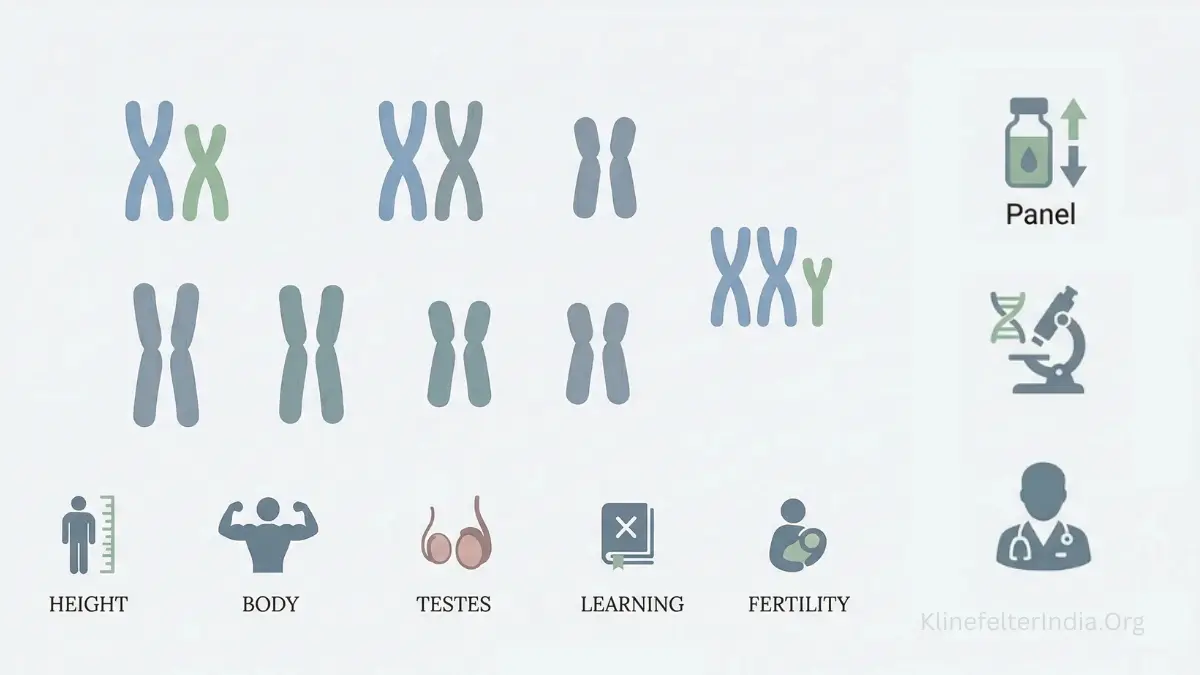
Key Takeaways: Physical Signs: Common indicators include taller height, smaller testes, and reduced muscle mass. Confirmatory Test: Diagnosis requires a karyotype blood test to map chromosomes. Early Planning: Timely diagnosis allows for better hormone monitoring and future fertility planning.Recognising Klinefelter Syndrome is not straightforward. Symptoms vary widely by age and severity, and many men do not realise they have the condition until adulthood - often when investigating fertility concerns. This article explains what symptoms to watch for at different life stages and walks you through the diagnosis process in India, including what tests are involved, what they cost, and what to expect at each step. Early diagnosis matters because it opens the door to effective treatment and significantly better long-term health outcomes. Why Klinefelter Syndrome Is So Often Missed Klinefelter Syndrome is one of the most underdiagnosed genetic conditions in the world. Despite affecting approximately 1 in 500 to 1,000 males[1], only around 5 to 10 percent of men with KS ever receive a confirmed diagnosis. In India, where routine genetic screening at birth is not standard practice and awareness among general physicians remains limited, the gap between those living with the condition and those who know about it is even wider. The reason diagnosis is so frequently missed comes down to how the condition presents. In childhood, a boy who is quiet, tall for his age, or struggles slightly with reading does not typically raise clinical concern. Symptoms are easily attributed to normal variation, and without a reason to test, most boys pass through childhood and adolescence without ever being investigated. The result is that most Indian men with Klinefelter Syndrome are diagnosed between the ages of 30 and 40, typically after discovering fertility difficulties and undergoing a semen analysis that reveals very low or absent sperm. This delayed diagnosis has real consequences. Starting testosterone replacement therapy in late adolescence or early adulthood leads to better bone density, more typical muscle development, and a meaningfully reduced risk of osteoporosis later in life[2]. For teenagers, earlier treatment can mean going through a more typical puberty experience, with significant benefits for mental health and social development. For men who want biological children, earlier diagnosis also matters because fertility preservation options such as sperm banking or micro-TESE tend to be more successful at younger ages[2]. If you recognise symptoms in yourself or your son, know that testing is straightforward and diagnosis opens the door to effective management. Klinefelter Syndrome Symptoms by Life Stage Symptoms of Klinefelter Syndrome change as you grow, and not every man with KS experiences all of them. There is wide variation in how the condition presents, and some men have very mild symptoms throughout their lives while others experience more pronounced effects. What follows is a guide to what is commonly seen at each stage - not a checklist of everything you should expect. Infancy and Early Childhood (0 to 5 years) In the earliest years, signs of Klinefelter Syndrome are subtle and easily overlooked. Some infants show reduced muscle tone, sometimes described as a floppy quality, and may reach motor milestones such as sitting, crawling, and walking slightly later than peers. A quieter temperament, early speech delays, and in some cases undescended testes or a smaller than typical penis may be present. The reality is that most boys are not diagnosed at this age. These signs are non-specific and commonly attributed to normal developmental variation, which is why infancy diagnoses are rare outside of prenatal testing. Childhood (6 to 12 years) As boys with Klinefelter Syndrome move through primary school years, a pattern sometimes begins to emerge. They are often taller than their classmates, particularly from around age eight onwards. Learning difficulties may become apparent - not intellectual disability, but specific challenges with reading comprehension, verbal expression, and executive functions like planning and organising. A quieter, shyer temperament is common, as is slightly less coordination than peers. Testes remain small and firm. These signs, taken individually, rarely prompt concern. Taken together and recognised by an informed parent or paediatrician, they can lead to earlier investigation. Adolescence (13 to 18 years) Adolescence is when Klinefelter Syndrome becomes more visible, and it is often the first point at which parents or doctors begin to investigate seriously. Puberty may be delayed or incomplete. Facial and body hair may be sparse compared to peers, the voice may not deepen fully, and muscle development may remain minimal despite regular physical activity. Around 50 percent of adolescent boys with KS develop some degree of gynecomastia - breast tissue growth[4] - which can range from barely noticeable to more prominent, and which carries significant emotional weight during an already difficult developmental period. Taller than average stature, longer limbs relative to the torso, narrower shoulders, and wider hips are also commonly seen. Testes typically remain at a prepubertal size. The social and emotional dimension at this stage is significant. Anxiety, particularly social anxiety, is more common in adolescent boys with KS, as are low self-esteem, body image concerns, depression, and a tendency to withdraw socially[2]. Many boys at this stage feel different from their peers without having any explanation for why. If KS is going to be diagnosed before adulthood, adolescence is typically when it happens - provided someone recognises the pattern. Adulthood (18 years and older) Most Indian men with Klinefelter Syndrome are diagnosed in adulthood, and infertility is the most common reason they seek investigation. After trying to conceive for twelve months or more without success, a semen analysis reveals very low sperm count or azoospermia - no sperm at all - which leads to genetic testing and a 47,XXY result[3]. Beyond fertility, adult men with KS typically experience a cluster of low testosterone symptoms. Chronic fatigue and low energy are among the most common complaints. Reduced libido, difficulty building or maintaining muscle mass, increased body fat particularly around the abdomen and chest, and poor concentration or mental fog are also frequently reported. Erectile dysfunction in men under forty, without an obvious cause, is worth investigating. Gynecomastia may develop if it was not present earlier. On the mental health side, depression and anxiety are significantly more common in men with KS than in the general population[2]. Many men describe a long-standing sense of feeling different or not quite right without being able to identify why - a feeling that often resolves considerably once a diagnosis is made and treatment begins. The Diagnosis Process in India Getting a confirmed Klinefelter Syndrome diagnosis in India typically involves four to five steps, from your first specialist appointment to a definitive result. The full process takes two to four weeks and costs between ₹7,500 and ₹13,500 at a private facility, less at a government hospital. Step 1 - See an Endocrinologist The right first step is an endocrinologist, not a general physician. Endocrinologists specialise in hormone disorders and are significantly more likely to recognise the KS pattern and order the right tests. At your first appointment, it helps to come prepared with a written summary of your symptoms and how long you have experienced them, any fertility concerns, and questions you want answered. Consultation fees at private clinics in major Indian cities typically range from ₹1,000 to ₹2,500. Step 2 - Physical Examination Your endocrinologist will carry out a physical examination that includes checking testicular size using an orchidometer, assessing for gynecomastia, reviewing body proportions including arm span relative to height, and evaluating secondary sexual characteristics such as facial and body hair distribution. This examination, combined with your symptom history, helps determine whether hormone testing and genetic investigation are warranted. Step 3 - Hormone Panel The next step is a fasting blood test, ideally taken in the morning when testosterone levels are at their highest. The panel will typically include total and free testosterone, LH (luteinising hormone), FSH (follicle-stimulating hormone), and estradiol. In Klinefelter Syndrome, the characteristic pattern is low testosterone combined with elevated LH and FSH - a combination known as primary hypogonadism[4]. This hormonal picture strongly suggests KS but is not on its own definitive. Results are usually available within 24 to 48 hours. Cost at a private lab ranges from ₹1,500 to ₹3,000. Step 4 - Karyotype Test The karyotype test is the only investigation that definitively diagnoses Klinefelter Syndrome[3]. A blood sample is sent to a genetics laboratory where technicians examine and photograph the chromosomes under a microscope. The result will show one of four possibilities: 47,XXY indicating classic Klinefelter Syndrome, 46,XY/47,XXY indicating mosaic Klinefelter Syndrome, a rare variant such as 48,XXXY or 48,XXYY, or a normal 46,XY result meaning KS is not present. Results take between seven and fourteen days, occasionally up to three weeks. Karyotype testing costs vary considerably depending on where you go. Government hospitals typically charge ₹3,000 to ₹5,000. Private labs such as Thyrocare and SRL charge ₹5,000 to ₹8,000. Premium private hospitals may charge ₹8,000 to ₹12,000. For most men, a private lab offers a reasonable balance of cost and turnaround time. ### Step 5 - Follow-up Tests After Diagnosis Once a KS diagnosis is confirmed, your endocrinologist will typically order a bone density scan (DEXA) to assess your bone health, a semen analysis if fertility is a concern, and a metabolic panel covering blood sugar, cholesterol, and liver function. A DEXA scan costs approximately ₹2,000 to ₹4,000, a semen analysis ₹500 to ₹1,500, and a metabolic panel ₹800 to ₹2,000. Taking everything together, the total cost of a complete Klinefelter Syndrome diagnosis in India - from first consultation through to karyotype result - runs from approximately ₹7,500 to ₹13,500 at a private facility. Government hospital pathways can bring this down considerably, though waiting times for genetics lab results may be longer. When to Get Tested Knowing when to seek investigation is not always obvious, because no single symptom on its own is sufficient to diagnose Klinefelter Syndrome. What matters is recognising combinations of signs that together suggest it is worth asking an endocrinologist to investigate further. For adult men, the clearest trigger is fertility difficulty. If you have been trying to conceive for twelve months or more without success, or if a semen analysis has already shown very low or absent sperm, genetic testing is strongly warranted. Beyond fertility, it is worth getting tested if you have chronically low energy that sleep does not resolve, persistent difficulty building muscle despite regular exercise, low libido, or erectile dysfunction under the age of forty without an obvious cause. Physical signs such as very small testes, significant gynecomastia, or notably sparse facial and body hair alongside other symptoms should also prompt investigation. For parents, the signs to watch for in a son are different. If a boy shows no signs of puberty by age fourteen or fifteen, if his testes have not grown during puberty, or if he develops breast tissue during adolescence, these are reasons to consult a paediatric endocrinologist. A pattern of being considerably taller than peers combined with learning difficulties and social withdrawal is also worth discussing with a specialist, even if no single element seems alarming on its own. In terms of who to see: an endocrinologist is the right first choice for most men. If your primary concern is fertility, an andrologist is equally appropriate as a starting point. After a diagnosis is confirmed, a genetic counsellor can help you understand the implications fully and answer questions about family planning. Common Questions Can I have Klinefelter Syndrome without experiencing all the symptoms? Yes, and this is more common than many people realise. Symptom severity varies widely between individuals. Some men have very mild presentations with only low testosterone and fertility concerns, while others experience a broader range of effects. Men with mosaic Klinefelter Syndrome, where only some cells carry the 47,XXY pattern, often have milder symptoms overall. The only reliable way to know whether you have KS is through karyotype testing, regardless of how many or how few symptoms you have. What if my testosterone level comes back normal? It is possible, particularly in younger men and in those with mosaic KS, to have testosterone levels within or close to the normal range[5]. This does not rule out Klinefelter Syndrome. If you have other indicators - small testes, infertility, the characteristic physical features - it is worth requesting a karyotype test even when the hormone panel looks relatively normal. Testosterone levels in KS can also decline over time, so a result that appears normal in your twenties may not reflect your hormone status a decade later. How accurate is the karyotype test? The karyotype test is extremely accurate because it directly visualises your chromosomes rather than inferring anything indirectly. It is the gold standard for KS diagnosis for this reason. The only scenario where it may not capture the full picture is very low-level mosaicism, where only a small proportion of cells carry the 47,XXY pattern - but this is uncommon. For the vast majority of men, a single blood karyotype provides a definitive answer. What to Do Next If you recognise symptoms in yourself or your son, the process from here is straightforward. You do not need a referral or a confirmed diagnosis before taking the first step. Start by booking an appointment with an endocrinologist in your city. You do not need to arrive with a diagnosis in hand - bring a written note of your symptoms, how long you have had them, and any fertility concerns if relevant. The Finding a KS Doctor in India guide has practical advice on identifying the right specialist and what to ask at your first appointment. From there, your endocrinologist will guide the testing process. Expect a hormone panel first, followed by a karyotype test if the results suggest KS. The full process from first appointment to confirmed diagnosis typically takes two to four weeks. Budget approximately ₹7,500 to ₹13,500 for the complete diagnostic workup at a private facility. The Tests and Lab Costs in India guide has a full breakdown of what each test involves and where to get them done across major Indian cities. Once you have a diagnosis, the next step is understanding your treatment options and what the path forward looks like. The What is Klinefelter Syndrome guide gives you the full picture of the condition if you are newly diagnosed. The Complete TRT Guide for India covers everything about testosterone replacement therapy, and the First 90 Days After Diagnosis guide gives you a practical week-by-week roadmap for the period immediately after diagnosis. A diagnosis of Klinefelter Syndrome is not bad news in the way it might first feel. It is an explanation, and with that explanation comes access to treatment that works. Most men who are properly diagnosed and treated go on to live full, healthy lives. The sooner you know, the sooner that process can begin.
- Editor
- 17 Feb, 2026
What is Klinefelter Syndrome?
Key Takeaways: Genetic Variation: Klinefelter Syndrome (47,XXY) is a natural chromosomal variation in males, not a disease. Prevalence: It affects roughly 1 in 600 males, with an estimated 1 million+ individuals in India. Health Outlook: With proper hormone care, men with KS live active, healthy, and normal lives.If you have just been diagnosed with Klinefelter Syndrome, you are probably looking for clear, honest answers. This article explains what Klinefelter Syndrome is in plain language - what causes it, how it affects your body, and what treatment looks like in India. By the end, you will have a solid understanding of your diagnosis and a clear sense of what to do next. What is Klinefelter Syndrome? Klinefelter Syndrome is a genetic condition where males are born with an extra X chromosome. The typical male chromosome pattern is 46,XY - 46 chromosomes in total, with one X and one Y. Men with Klinefelter Syndrome have 47,XXY - one extra X chromosome in every cell of their body. The condition was first described by American physician Dr. Harry Klinefelter in 1942, which is how it got its name. It is worth being clear about one thing: Klinefelter Syndrome is not a disease. It is a chromosomal variation you were born with. Having an extra X chromosome does not change the fact that you are male. You have a Y chromosome, male anatomy, and a male identity. Your genetic blueprint is simply a little different from most men. Klinefelter Syndrome is one of the most common chromosomal conditions in the world, affecting approximately 1 in 500 to 1,000 males[2]. In India, that translates to an estimated 700,000 to 1,400,000 men living with the condition right now. The vast majority have no idea, because only around 5 to 10 percent of men with Klinefelter Syndrome are ever diagnosed[2]. Many live their entire lives without knowing, because symptoms can be mild or easy to overlook. The condition is manageable with proper treatment, and most men with Klinefelter Syndrome live full, healthy lives. It is not life-threatening, and you are far from alone. What Causes Klinefelter Syndrome? Klinefelter Syndrome is caused by a random genetic event that occurs during conception. When sperm and eggs are formed, chromosomes are supposed to separate evenly. Sometimes this process does not work perfectly - a mistake called nondisjunction occurs, and an extra X chromosome ends up in either the sperm or the egg[1]. When that sperm or egg combines at conception, the result is an embryo with XXY chromosomes instead of XY. This is entirely random. It is not something anyone could have prevented or predicted, and it does not run in families[1]. Your children will not have an increased risk of Klinefelter Syndrome. Nothing about your lifestyle, your health, or your choices caused this. Nothing your parents did or did not do during pregnancy caused it either. The only known factor associated with a slightly higher occurrence is maternal age over 35[3], though the condition affects men born to mothers of all ages, across all ethnicities, nationalities, and socioeconomic backgrounds equally. There was nothing that could have been done differently. This is simply one of nature's variations that happens randomly during human development. ## How Does Klinefelter Syndrome Affect You? The primary effect of Klinefelter Syndrome is lower testosterone production. The extra X chromosome affects how the testes develop and function, which means they produce less testosterone than is typical[1]. This lower testosterone level is the root cause of most symptoms you may experience. Physical effects vary considerably from one man to the next. Some men have very mild symptoms they barely notice. Others experience more pronounced changes. Common effects include lower energy and fatigue, reduced muscle mass, increased body fat particularly around the waist and chest, sparse or patchy facial and body hair, and smaller testes. Around 50 percent of men with Klinefelter Syndrome develop some degree of gynecomastia - breast tissue growth - which can range from barely noticeable to more significant[4]. Many men with the condition are also taller than average, often with longer arms and legs relative to their torso. Fertility is the other major area of concern. Most men with Klinefelter Syndrome produce very little sperm or none at all naturally, because the extra X chromosome disrupts normal sperm production in the testes[1]. This does not mean fatherhood is impossible. Medical options exist, including micro-TESE - a surgical procedure that can retrieve sperm directly from the testes[2] - as well as donor sperm and adoption. Many men with Klinefelter Syndrome go on to have families. There is a detailed Fertility Options Guide on this site that walks through every available path, including costs and success rates in India. It is also worth knowing about a variant called mosaic Klinefelter Syndrome, where only some cells carry the XXY pattern while others have the typical XY pattern. Men with mosaic KS often experience milder symptoms and sometimes have better fertility potential than those with the classic form[5]. Many men are not diagnosed until adulthood - often during investigations for infertility - precisely because their symptoms were subtle enough not to raise concern earlier. If that is your situation, it is more common than you might think. The encouraging reality is that most of these effects are treatable. With proper testosterone replacement therapy, the majority of men with Klinefelter Syndrome see meaningful improvements in energy, muscle mass, body composition, mood, and overall quality of life. For a detailed breakdown of symptoms by life stage and how they present in Indian men, see the Symptoms and Diagnosis Guide. Treatment for Klinefelter Syndrome in India The primary treatment for Klinefelter Syndrome is Testosterone Replacement Therapy, commonly called TRT. Since the core issue is lower testosterone production, replacing that testosterone addresses most symptoms effectively. Most men who start TRT report meaningful improvements in energy levels, muscle mass and strength, bone density, mood and mental clarity, body composition, and sexual function[1]. These are not minor quality-of-life adjustments. For many men, starting TRT is the point at which they begin to feel genuinely well for the first time. The good news for Indian men is that TRT is both widely available and affordable here. Injectable testosterone is the most commonly used form in India and costs approximately ₹500 to ₹800 per month. It is administered every two to three weeks, either by a doctor or self-administered at home once you are comfortable with the process. Testosterone gel is also available and offers the convenience of daily application without injections, though it costs considerably more at around ₹2,000 to ₹3,000 per month. Patches are another option, though less commonly prescribed in India. Alongside the medication itself, you will need monitoring blood tests twice a year to check your testosterone levels and overall health. These typically cost ₹2,000 to ₹4,000 per test at a private lab, and less at government facilities. Including medication, monitoring, and doctor consultations, most men in India manage their Klinefelter Syndrome for approximately ₹12,000 to ₹25,000 per year on injectable testosterone. If you choose gel, expect annual costs closer to ₹25,000 to ₹35,000. TRT is managed by an endocrinologist - a hormone specialist - not a general physician. If you have not yet seen one, finding the right doctor is your most important first step. The Finding a KS Doctor in India guide covers what to look for and where to start in major Indian cities. Beyond TRT, other treatments may be relevant depending on your individual situation. If gynecomastia is causing significant physical or psychological discomfort, surgical removal is an option available at most large private hospitals in India. Bone health support through Vitamin D, calcium, and weight-bearing exercise is recommended for most men with the condition, as low testosterone over time can affect bone density[1]. Fertility treatment is a separate pathway that requires its own planning and specialist involvement. And if the diagnosis has brought up anxiety, low mood, or adjustment difficulties - which is entirely normal - speaking to a psychologist or counsellor can make a significant difference. Mental health support remains underutilised in India, but it is available in most cities and increasingly online. The long-term outlook with treatment is straightforward. With proper testosterone replacement and regular monitoring, most men with Klinefelter Syndrome maintain good health, live normal lifespans, and lead full lives - in their careers, their relationships, and their families. This is one of the more manageable hormonal conditions, and treatment in India is both accessible and effective. For a full breakdown of every TRT option available in India, how to start treatment, what monitoring involves, and how to manage side effects, see the Complete TRT Guide for India. Common Questions Can Klinefelter Syndrome be cured? There is no cure for Klinefelter Syndrome in the sense that the extra X chromosome is present in every cell of your body from conception and cannot be removed or changed. But saying there is no cure is not the same as saying you are stuck with symptoms. The symptoms are highly treatable. Testosterone replacement therapy addresses the vast majority of issues that men with Klinefelter Syndrome face. With treatment, most men feel genuinely well - good energy, normal muscle mass, healthy mood, active sex life. Think of it this way: someone with type 1 diabetes cannot cure their pancreas, but with insulin they live a completely normal life. The same logic applies here. Treatment does not fix the chromosome, but it addresses what the chromosome affects. Can I live a normal life? Yes. With testosterone replacement therapy, the vast majority of men with Klinefelter Syndrome maintain normal energy levels, pursue any career they choose, have relationships, get married, have children through various options, stay physically active, and enjoy good quality of life. Klinefelter Syndrome is one part of who you are. It is not your whole identity, and it does not define what you are capable of. Will I be able to have children? Natural conception is uncommon for men with Klinefelter Syndrome because most produce very little or no sperm naturally. However, this does not mean fatherhood is out of reach. A surgical procedure called micro-TESE can retrieve sperm directly from the testes in around 30 to 50 percent of cases[2], which can then be used with IVF. Donor sperm and adoption are also valid paths that many men with KS choose. The Fertility Options Guide covers every available route in detail, including costs and success rates at Indian fertility clinics. Is this my fault - or my parents' fault? No. Klinefelter Syndrome is caused by a random chromosomal event during conception that no one could have predicted or prevented. Nothing you did caused it. Nothing your parents did caused it. It is not inherited, it does not run in families, and there is no lifestyle factor, dietary choice, or health decision that leads to it. It is one of nature's random variations, and it happens across all ethnicities, backgrounds, and family histories equally. For answers to more detailed questions about treatment, costs, finding a doctor, insurance, and fertility specifics, see the Klinefelter Syndrome FAQ. What to Do Next If you have just been diagnosed, the most important thing to know is that you do not need to figure everything out today. Here are the immediate steps that matter most. Start by finding an endocrinologist - a hormone specialist - in your city. This is the doctor who will manage your Klinefelter Syndrome long term. A general physician can refer you, or you can look for one directly at a large private hospital or government medical college in your area. The Finding a KS Doctor in India guide has practical advice on what to look for and what questions to ask at your first appointment. Once you have an appointment booked, your endocrinologist will order baseline blood tests to check your testosterone and hormone levels, along with a general metabolic panel. Understanding what these tests measure and what to expect from the process will help you feel more prepared. The Tests and Lab Costs in India guide covers exactly this, including typical costs at private and government labs across Indian cities. From there, take some time to understand your treatment options before your first consultation. Reading the Complete TRT Guide for India and the Fertility Options Guide before you see your doctor means you can ask better questions and make more informed decisions. Knowledge genuinely reduces anxiety here. Most men see an endocrinologist within two to four weeks of diagnosis and begin treatment within two to three months if it is indicated. There is no rush. Take the time you need to process the information and move at a pace that feels right for you.