Showing Posts From
Klinefelter syndrome
- Editor
- 15 Apr, 2026
The First 90 Days After a Klinefelter Syndrome Diagnosis
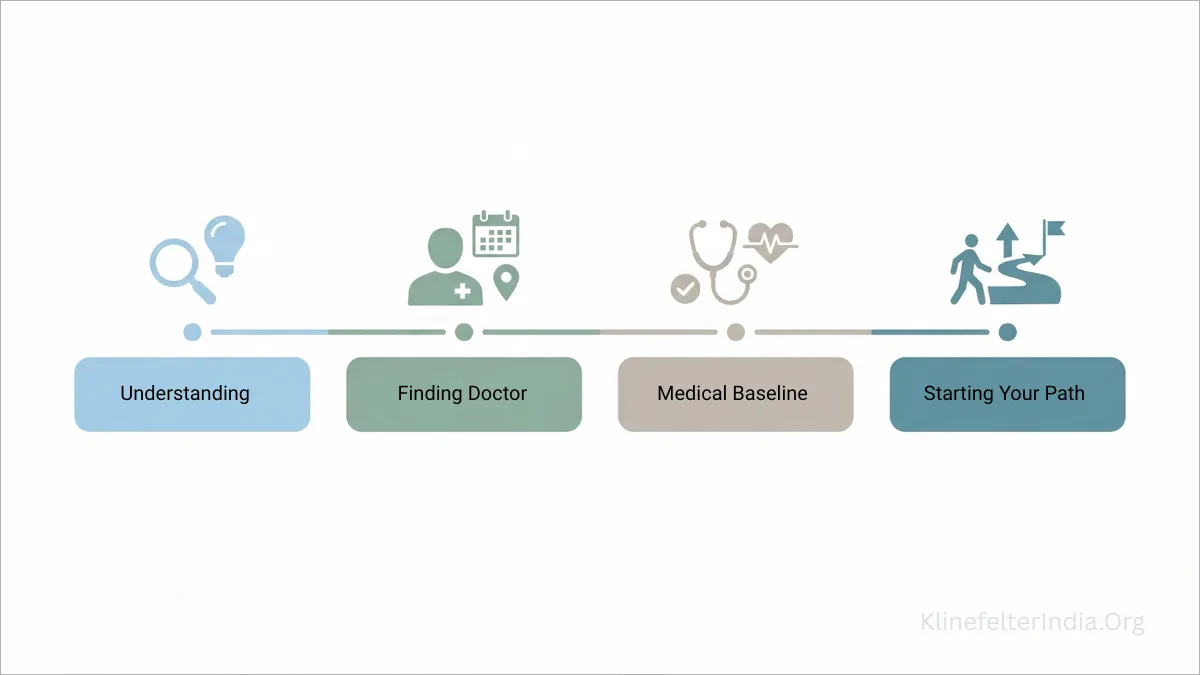
Key Takeaways: Initial Phase: The first 90 days should focus on adjusting and getting baseline tests. Specialists: Secure appointments with qualified endocrinologists for long-term health. No Rush: Take time to understand your diagnostics before initiating therapy.A Klinefelter Syndrome diagnosis can feel overwhelming. One moment you are living your normal life, and the next you are looking at a karyotype report showing 47,XXY - a chromosome pattern you have never heard of before. Questions flood in immediately. What does this mean? What do I do now? Is my health at risk? Can I still have children? This reaction is completely normal. Most men diagnosed with Klinefelter Syndrome - especially adults diagnosed during fertility investigations - feel a mix of confusion, anxiety, and sometimes relief that they finally have answers for things that have felt wrong for years. This guide gives you a clear, week-by-week action plan for the first 90 days after diagnosis. No overwhelm, no medical jargon, just practical steps in order with India-specific costs and resources. Follow this plan, and by day 90 you will have a solid understanding of your condition, a qualified doctor managing your care, a treatment plan in place, and a clear path forward. Why the First 90 Days Matter The first three months after diagnosis set the foundation for everything that follows. The decisions you make now - which doctor to see, whether to start treatment, what to do about fertility - shape the next several years of your health and wellbeing. The good news is that you do not need to figure everything out at once. Klinefelter Syndrome is manageable. Millions of men worldwide live full, healthy lives with 47,XXY chromosomes[1]. The key is taking the right steps in the right order without rushing or skipping stages. This plan breaks 90 days into four clear phases. Each phase builds on the previous one. If you are feeling overwhelmed right now, just focus on Week 1. The rest will follow naturally. Before You Start - What You Need to Know Three things are important to understand before you begin working through this plan. First, Klinefelter Syndrome is not a medical emergency. You do not need to rush to a hospital today. Most men with KS go years, sometimes decades, without diagnosis and without serious immediate harm. You have time to research properly, find the right doctor, and make informed decisions rather than rushed ones. Second, your fertility timeline matters, but do not panic. If having biological children is important to you, acting within the first few weeks to months is valuable - but not because fertility disappears overnight. It is because starting testosterone replacement therapy later will suppress whatever remaining sperm production exists. Discussing fertility with your doctor early keeps your options open. This is important but not an immediate crisis. Third, you are not alone in this. Klinefelter Syndrome affects approximately 1 in 500 to 1,000 males[2]. In India, that translates to an estimated 700,000 to 1.4 million men, the vast majority of them undiagnosed. You are joining a large community of men navigating this same journey, even if most of them remain invisible. Phase 1 - Understanding (Days 1 to 7) The first week is about understanding what Klinefelter Syndrome actually means for you - not just medically, but emotionally as well. Days 1 to 2 - Process the Diagnosis Give yourself permission to feel whatever you are feeling. Shock, confusion, sadness, anger, relief - all of these are normal reactions to a life-changing diagnosis. You do not need to have everything figured out immediately, and you do not need to make any decisions yet. Just sit with the information for a day or two. Talk to someone you trust if you are ready to. This could be your partner, a close friend, or a family member. You do not need to explain everything in detail right away. Even saying "I received some health news and I am still processing it" is enough to open the door to support. Days 3 to 5 - Learn the Basics Read the foundational articles to understand what Klinefelter Syndrome actually means. Start with the What is Klinefelter Syndrome article, which covers what the condition is, what it is not, and what it means for your body. Then read the Klinefelter Syndrome Symptoms and Diagnosis article, which helps you understand which symptoms are connected to KS and which are not. What you are building here is a calm, factual understanding of your condition. Not every concerning symptom you find online will apply to you. Many men with KS have mild symptoms and live very normal lives. The goal of these first few days is to replace panic with accurate information. Days 6 to 7 - Make Your Decision List Write down the questions and decisions that lie ahead of you. A simple written list helps reduce the mental chaos. Do you want biological children someday? Do you have symptoms that are affecting your daily life right now? Do you have a general physician you trust who can give you a referral? What is your realistic budget for initial consultations and tests? Keep this list. You will bring it to your first doctor appointment and use it to guide your questions. Writing things down makes the path ahead feel more manageable. Phase 2 - Finding Your Doctor (Days 8 to 21) Week 2 - Identify and Screen Doctors Finding the right doctor is the single most important action in the first 90 days. Everything else - tests, treatment, fertility decisions - flows from having a qualified doctor who understands Klinefelter Syndrome. The type of doctor you need is an endocrinologist, a hormone specialist. If fertility is your primary concern, an andrologist - a male reproductive specialist - is ideal, though they are less common and mainly found in fertility clinics in major cities. To find potential doctors, start by searching hospital websites for endocrinology departments in your city. Doctor platforms such as Practo or Lybrate allow you to filter by specialty. Ask your general physician for a referral. Call clinics directly and ask whether the doctor treats Klinefelter Syndrome patients. When you call to screen doctors, ask these specific questions. Does the doctor have experience with Klinefelter Syndrome? How many KS patients does the doctor currently treat? What is the first consultation fee? What is the typical wait time for an appointment? The answers will tell you whether this doctor is worth booking with. The Finding a Klinefelter Doctor in India guide covers this process in complete detail, including red and green flags to watch for during consultations. Week 3 - Book and Prepare for Your Consultation Book an appointment with your top choice. Appointments with good specialists typically take one to two weeks to get, so book early and use the waiting time to prepare. Gather these documents before your appointment. Your karyotype report, which is the test that confirmed your 47,XXY diagnosis. Any previous blood test results you have. Your semen analysis report if one was done during fertility investigations. The decision list you wrote in Week 1. A written list of questions you want answered. Consultation costs vary significantly depending on where you go. Government hospitals charge approximately ₹300 to ₹800. Private hospitals run ₹1,000 to ₹2,500. Premium hospitals can charge ₹2,000 to ₹5,000. Budget accordingly and remember that the first consultation is typically the most expensive. Phase 3 - Medical Baseline (Days 22 to 60) Week 4 - First Consultation Your first appointment with an endocrinologist will typically last 30 to 45 minutes if the doctor is thorough. The doctor will review your karyotype, ask about your symptoms, examine you physically, and discuss treatment options. Key points to raise during this consultation: you want to understand what Klinefelter Syndrome means for your long-term health. You want to know what tests are needed before starting any treatment. If children matter to you, explicitly state that you want to discuss fertility options before making any decisions about treatment. Ask what the monitoring plan looks like long term. A good doctor will welcome these questions and take time to answer them properly. If the doctor seems rushed, dismissive, or unwilling to discuss fertility, that is a red flag. Consider seeking a second opinion. Weeks 5 to 6 - Baseline Blood Tests Your doctor will order a panel of blood tests to establish your current hormone levels and overall health before any treatment begins. These are your baseline measurements. The table below shows the key tests, what they measure, and why each matters.Test What It Measures Why It MattersTotal Testosterone Your current testosterone level Determines if TRT is neededFree Testosterone Testosterone available to your body More accurate than total aloneLH (Luteinizing Hormone) Signals testes to produce testosterone Usually elevated in KSFSH (Follicle Stimulating Hormone) Related to sperm production Usually elevated in KSEstradiol Estrogen level Important for bone health monitoringCBC (Complete Blood Count) Blood cell counts Baseline before TRTLiver Function Tests Liver health Important if oral testosterone consideredVitamin D Bone health marker Often low in KSLipid Profile Cholesterol levels Cardiovascular health baselineDEXA Scan Bone density Optional but recommendedEstimated lab costs at private facilities in India: full hormone panel approximately ₹1,500 to ₹3,000, complete blood count and liver function tests ₹500 to ₹800, Vitamin D test ₹300 to ₹500, lipid profile ₹400 to ₹600, and DEXA bone density scan if ordered ₹2,000 to ₹4,000. Where to get tests done: government hospital labs are the cheapest option at 40 to 60 percent less than private labs. Private chains such as Thyrocare, Dr. Lal PathLabs, SRL, and Metropolis offer convenience and home collection. Your doctor may provide a referral to a specific lab they work with regularly. Weeks 7 to 8 - Review Results and Discuss Treatment Book a follow-up appointment once all test results are ready, which is usually one to two weeks after the tests are done. Your doctor will explain what your results mean, recommend whether testosterone replacement therapy is needed based on your testosterone levels and symptoms, discuss the different TRT options available with their costs and trade-offs, address any fertility concerns based on your results, and create a monitoring schedule going forward. This is the appointment where you make informed treatment decisions - not before. Wait for your test results before committing to any treatment path. The decisions you make should be based on data, not guesses. Phase 4 - Starting Your Path (Days 61 to 90) Weeks 9 to 10 - Decide on Treatment Based on your test results and your doctor's recommendations, you will decide whether to start testosterone replacement therapy and which type suits your situation and budget. The table below gives you a quick guide to likely recommendations based on different scenarios.Your Situation Likely RecommendationTestosterone significantly low + symptoms present TRT recommendedTestosterone borderline (300-400 ng/dL) Discuss with doctor - lifestyle first or low-dose TRTTestosterone normal but symptoms present Monitor closely, lifestyle optimizationsFertility is priority Discuss fertility preservation BEFORE starting TRTThe TRT for Klinefelter Syndrome Complete Guide covers all treatment options, costs, benefits, and what to expect in detail. Read it thoroughly before making your final decision. Weeks 11 to 12 - Lifestyle Foundations Regardless of whether you start TRT immediately, these lifestyle steps support your health with Klinefelter Syndrome and should begin in the final weeks of your first 90 days. Regular exercise matters significantly. Strength training and cardiovascular exercise help maintain muscle mass, bone density, and mood[3]. Aim for three to four sessions per week. You do not need a gym membership - bodyweight exercises and walking count. Vitamin D supplementation is important because most men with KS have low Vitamin D levels, which affects bone health[3]. Your doctor will likely recommend a specific dose based on your blood test results. Sleep should be prioritized. Aim for seven to eight hours per night. Fatigue is one of the most common symptoms in KS, and poor sleep makes it significantly worse. Treat sleep as a medical intervention, not a luxury. Alcohol intake should be moderate. Alcohol affects testosterone levels and liver health, both of which matter more when you have Klinefelter Syndrome. You do not need to eliminate it entirely, but be mindful. Stress management is important because anxiety is common after diagnosis. Regular exercise, adequate sleep, and talking to someone you trust all help. If anxiety persists beyond the first few months, speak to your doctor. There is no shame in seeking mental health support, and it can make a meaningful difference. Your 90-Day Summary The table below gives you the complete 90-day action plan at a glance, including estimated costs for each phase.Phase Days Key Actions Estimated Cost (₹) StatusUnderstanding 1-7 Process diagnosis, read articles, make decision list Free [ ]Finding Doctor 8-21 Research doctors, screen by phone, book consultation 0 (research) [ ]First Consultation 22-28 See endocrinologist, discuss symptoms and fertility 300-5,000 [ ]Baseline Tests 29-42 Complete blood panel, wait for results 2,700-8,900 [ ]Review & Plan 43-60 Follow-up with doctor, review results, discuss treatment 300-2,500 [ ]Treatment Decision 61-75 Decide on TRT if recommended, start if appropriate 500-3,000/month [ ]Lifestyle 76-90 Exercise routine, Vitamin D, sleep, stress management Minimal [ ]Total estimated cost for the first 90 days runs from approximately ₹3,800 to ₹19,400, with the wide range depending on whether you choose government or private facilities and which tests your doctor orders. Common Questions What if I am not ready to see a doctor yet? That is acceptable. The diagnosis is not going anywhere, and KS is not a medical emergency. Take a few days or even a week to process the information. Read the foundational articles, talk to someone you trust, and when you feel ready, start with Phase 2. Most men find that having basic knowledge reduces their anxiety enough to take the next step forward. Should I tell my family right away? There is no single right answer here. Some men tell their partner immediately and find it helpful. Others take a few days to understand the condition themselves before sharing. Consider who you trust most and who will respond with support rather than panic. Start there. You do not owe anyone an immediate explanation, and it is acceptable to wait until you feel ready. My diagnosis came through fertility testing. Does that mean I cannot have children? Not necessarily. Approximately 10 percent of men with Klinefelter Syndrome can conceive naturally. For others, options such as micro-TESE - a surgical sperm retrieval procedure - have success rates of 30 to 50 percent. Donor sperm and adoption are also valid paths that many men with KS choose. The Fertility Options for Klinefelter Syndrome guide covers all options in complete detail. The key takeaway is to discuss fertility with your doctor before starting testosterone replacement therapy, as TRT will suppress whatever remaining sperm production exists. What if my testosterone levels come back normal? Some men with KS have testosterone levels in the normal range but still experience symptoms. This is sometimes called relative hypogonadism - your body may require higher-than-normal testosterone levels to function optimally. Discuss your symptoms with your doctor even if the numbers look normal on paper. Treatment decisions should be based on both your test results and how you actually feel, not numbers alone. What to Do Next You have just read through a complete 90-day plan. Here is how to start today. Today, bookmark this article. Read the What is Klinefelter Syndrome article to build your foundational understanding of the condition. This week, make your decision list as outlined in Week 1, Days 6 to 7. Write down your questions, your concerns, and your priorities around fertility and treatment. Next week, start researching doctors in your city. Read the Finding a Klinefelter Doctor in India guide and make three to five screening calls to potential doctors. Within two to three weeks from today, have your first endocrinologist consultation booked. You do not need to complete this entire plan in one sitting or even in one week. Just take the next step. One step at a time, and 90 days from now you will have clarity, a treatment plan, and a clear path forward. This is manageable, and you can do this. NOTE: This is a practical action plan combining clinical research with healthcare navigation guidance. Sources include both peer-reviewed studies and institutional resources.

- Editor
- 10 Apr, 2026
25 Common Questions About Klinefelter Syndrome Answered
Key Takeaways: FAQ Guide: Answers the 25 most frequent questions about living with Klinefelter Syndrome. Topics Covered: Details development, daily health, clinical therapy, and marriage. Reference Format: Structured as a quick-read, evidence-based index for easy reference.A Klinefelter Syndrome diagnosis triggers a flood of questions. Some come late at night when you cannot sleep. Some come from your partner. Some come from family members who have searched online and are now concerned. This page collects the questions that newly diagnosed men ask most often and answers them as honestly as possible. Where the science is clear, the answer is direct. Where evidence is uncertain or under review, that is stated clearly as well. No false confidence, no vague disclaimers where real answers exist. Questions are grouped by topic. Use the topic headers below to jump to the section most relevant to you right now. Each section links to the full article on that topic where deeper detail is available. About Klinefelter Syndrome What exactly is Klinefelter Syndrome? Klinefelter Syndrome means you were born with an extra X chromosome. Your genetic pattern is 47,XXY instead of the typical 46,XY. This single chromosomal difference affects hormone production, primarily testosterone, which influences many systems in your body[1]. It is not a disease you caught or caused. It is a genetic variation that occurs randomly at conception. Read more in the What is Klinefelter Syndrome article. How common is Klinefelter Syndrome? [Answer under review] Published estimates of diagnosis rates vary across studies, and I am currently verifying which figures are most reliable before including specific percentages here. What is consistently clear across all research is that Klinefelter Syndrome affects approximately 1 in 500 to 1,000 males[1], and the majority of men with the condition remain undiagnosed throughout their lives. In India, this translates to hundreds of thousands of men living with KS, most of them unaware. Did I cause this? Is it my parents' fault? No. Klinefelter Syndrome is caused by a random error during cell division when eggs or sperm are formed. It is not caused by anything either parent did or did not do[1]. It is not inherited in the traditional sense, and it does not run in families. The event that leads to an extra X chromosome is entirely random and could not have been prevented. Will my children have Klinefelter Syndrome? No. Klinefelter Syndrome is not passed from father to child[1]. If you have biological children through assisted reproduction, they will not inherit the extra X chromosome from you. The condition does not carry forward to the next generation. Your children face the same background population risk as anyone else. Is Klinefelter Syndrome the same as being intersex? This depends on how the term intersex is defined and used. Medically, KS is a chromosomal variation that affects hormones and development. Some organizations and communities include it under the broader umbrella of intersex conditions, while others do not. What matters more than the label is understanding how the condition affects your specific body and health, and making informed decisions about your care. Health and Life Expectancy Does Klinefelter Syndrome shorten life expectancy? [Answer under review] Research indicates a modestly reduced life expectancy for men with KS compared to the general male population, but published estimates vary and I am verifying the most reliable figures before stating specific numbers here. What is consistently clear across studies is that this gap narrows significantly with proper medical management, particularly testosterone replacement therapy and regular monitoring[2]. Men who are actively managed by an endocrinologist live substantially healthier lives. Discuss your individual risk factors with your doctor rather than relying on population averages, which include many undiagnosed and untreated men. What health conditions am I at higher risk for? Research consistently identifies several elevated risks in men with Klinefelter Syndrome. These include cardiovascular disease, osteoporosis and bone fractures, type 2 diabetes, and metabolic syndrome[2]. Autoimmune conditions such as lupus and rheumatoid arthritis also occur more frequently in men with KS than in the general population[1]. The primary way to manage these risks is through regular monitoring by your endocrinologist, early detection, and appropriate treatment when issues arise. Is there a cancer risk with Klinefelter Syndrome? Yes, though the risk profile is specific. Breast cancer risk is meaningfully elevated in men with KS compared to other men, though it remains rare in absolute terms[3]. Testicular cancer risk, interestingly, is not elevated and may even be slightly lower in men with KS. Your doctor will factor these risks into your monitoring plan, which may include periodic clinical breast examinations. What about bone health? Osteoporosis is a genuine concern with Klinefelter Syndrome. Low testosterone and low estradiol levels lead to reduced bone mineral density over time[4]. This is why baseline bone density testing with a DEXA scan is recommended at diagnosis or when starting treatment, and why Vitamin D supplementation is typically prescribed. Testosterone replacement therapy itself helps protect and improve bone density over the long term. Does Klinefelter Syndrome affect how I live day to day? Most men with KS, once properly diagnosed and managed, live functionally normal lives. Fatigue, reduced energy, and mood changes are common symptoms before treatment but become manageable after starting testosterone replacement therapy if testosterone levels are low[4]. The goal of treatment is not just medical management but genuine quality of life - maintaining energy, relationships, work, and the activities that matter to you. Treatment Do I definitely need testosterone replacement therapy? Not necessarily. TRT is recommended when testosterone levels are low and when you have symptoms of hypogonadism such as fatigue, low libido, muscle loss, mood changes, or declining bone density[4]. Some men with KS have testosterone levels in or near the normal range and may not need treatment immediately. This is a decision made with your endocrinologist based on your blood test results and your symptoms, not a blanket requirement for everyone with KS. Read more in the TRT for Klinefelter Syndrome article. When should I start testosterone replacement therapy? The general guidance is that once your doctor confirms low testosterone and you have symptoms, there is no benefit to delaying treatment. Postponing TRT can accelerate bone loss, muscle loss, and metabolic problems[4]. The one important exception is fertility. If having biological children is a priority, discuss the timing with your doctor before starting TRT, as testosterone therapy suppresses any remaining sperm production. What are my TRT options and costs in India? Three main routes are available. Injectable testosterone is the most affordable at approximately ₹500 to ₹800 per month, administered every two to three weeks. Testosterone gel is more convenient with daily application but costs approximately ₹2,000 to ₹3,000 per month. Oral testosterone is available but less commonly prescribed in India. Your doctor will recommend an option based on your preference, lifestyle, and budget. The TRT Complete Guide covers all options in detail with full cost breakdowns. Are there side effects of testosterone replacement therapy? Yes, and they are worth understanding before you start. Common side effects include temporary acne, mood fluctuations particularly in the first few weeks, increased red blood cell count which your doctor monitors through regular blood tests, and occasional fluid retention. More serious but less common risks include elevated cardiovascular risk if testosterone is dosed too high. Regular monitoring with blood tests every three to six months keeps side effects manageable and allows your doctor to adjust your dose if needed. Can TRT be stopped once started? Technically yes, but it is generally not recommended for men with Klinefelter Syndrome. Once your body has chronically low testosterone, stopping TRT means returning to that state. Most men who stop experience a return of symptoms including fatigue, mood decline, and muscle loss. For men with KS, TRT is typically lifelong, similar to how someone with hypothyroidism takes thyroid medication indefinitely. Fertility and Family Can men with Klinefelter Syndrome have biological children? [Answer under review] Published estimates of natural fertility rates in men with KS vary, and I am verifying the most reliable figures before including specific percentages here. What is clear is that some men with KS do produce small amounts of sperm naturally, while the majority do not. For men who do not produce sperm in ejaculate, a surgical procedure called micro-TESE (microscopic testicular sperm extraction) offers a meaningful chance of retrieving viable sperm directly from testicular tissue. Success rates for micro-TESE in KS patients range from 30 to 50 percent depending on age and other factors. Retrieved sperm is used with IVF and ICSI. Read more in the Fertility Options for Klinefelter Syndrome article. How much does fertility treatment cost in India? Costs are covered in detail in the Fertility Options article, but the summary is: micro-TESE surgery costs approximately ₹80,000 to ₹1,50,000. IVF with ICSI, which is needed to use retrieved sperm, costs approximately ₹1,50,000 to ₹2,50,000 per cycle. Combined, one complete fertility attempt runs ₹2,65,000 to ₹4,75,000. Success is not guaranteed in one cycle, and many couples require two to three attempts. Donor sperm with IVF is significantly less expensive at approximately ₹1,00,000 to ₹3,00,000 per cycle. Should I discuss fertility before starting testosterone therapy? Yes, absolutely. This is one of the most important conversations to have with your doctor early in your treatment planning. Testosterone replacement therapy suppresses sperm production. If biological children are a possibility you want to keep open, your doctor may recommend addressing fertility first - either attempting micro-TESE before starting TRT, or banking sperm if any is present in ejaculate, or delaying TRT temporarily while fertility options are explored. This window matters because once TRT starts, recovering sperm production is difficult. What if I cannot have biological children? Donor sperm, adoption through CARA (Central Adoption Resource Authority), and choosing a child-free life are all valid paths. None of these options makes you less of a man or a partner. Many couples with KS build fulfilling families through donor sperm or adoption. The Fertility Options article covers each pathway in detail, including costs, processes, and emotional considerations. What matters is the path that feels right for you and your partner, not what others expect. Does Klinefelter Syndrome affect my partner's fertility? No. Klinefelter Syndrome affects only your sperm production. Your partner's fertility is completely independent of your KS diagnosis. If fertility issues exist on both sides, your doctor will address each separately with appropriate specialists. Mental Health, Relationships, and Daily Life Is feeling anxious or depressed after diagnosis normal? Completely normal. Research shows that men with KS have higher rates of anxiety and depression than the general population[5], and receiving a life-changing diagnosis is itself a significant emotional event. Reactive anxiety and sadness in the weeks after diagnosis are among the most commonly reported experiences. If anxiety or depression persists beyond the initial adjustment period of two to three weeks, or if it is interfering with your daily life, speak to your doctor. There is no shame in seeking mental health support, and it can make a meaningful difference. Can I still have relationships and get married? Yes. Klinefelter Syndrome does not prevent relationships or marriage. Many men with KS are in long-term partnerships and marriages. The challenges that exist around fertility, body image, and communication are real but navigable. Being open with a partner at whatever pace feels right to you generally strengthens the relationship rather than harming it. In the Indian context, family pressure around marriage can add stress, but KS itself is not a barrier to partnership. Do I need to tell anyone about my diagnosis? You decide who knows and when. There is no legal or medical requirement to disclose Klinefelter Syndrome to anyone. Many men tell their partner first, then close family members over time as they feel ready. Some choose to keep it private entirely. The decision depends on your relationships, your comfort level, and whether fertility conversations are immediately relevant. There is no single right approach, and you are entitled to privacy around your medical information. Will Klinefelter Syndrome affect my ability to work or perform physically? Not if managed properly. Before diagnosis or treatment, low testosterone can cause fatigue, reduced stamina, and difficulty building muscle, which may affect physically demanding work. After starting TRT if it is indicated, most men see significant improvements in energy, strength, and stamina within weeks to months[4]. Cognitively, some men with KS experience mild verbal processing or executive function differences[5], but these rarely affect professional performance in meaningful ways. With proper treatment, work and physical activity are not limited by KS itself. How do I explain Klinefelter Syndrome to someone who asks? A simple, honest explanation works best. "I have a genetic condition called Klinefelter Syndrome. It means I have an extra X chromosome, which affects my hormones. It is manageable with treatment." You do not owe anyone a detailed medical explanation unless you want to provide one. Share as much or as little as you are comfortable with. Most people are supportive once they understand it is a health condition, not something contagious or shameful. What to Do Next This page gives you answers to the most common questions. For deeper understanding of specific topics, follow the links below. If you are newly diagnosed, start with What is Klinefelter Syndrome and First 90 Days Action Plan. These give you the foundation and a clear roadmap for your first three months. If treatment is your immediate focus, the TRT Complete Guide covers everything about testosterone therapy in India including options, costs, and what to expect. If fertility is on your mind, Fertility Options is the complete guide to all pathways available to you. If finding a doctor feels overwhelming, Finding a Klinefelter Doctor in India walks you through the entire process step by step. If you still feel lost, that is acceptable. Bookmark this page and return to it as new questions arise. This resource will continue to grow over time. NOTE: Some answers are marked [Answer under review] where published data is being verified for accuracy. This FAQ will be updated as verification is completed.
- Editor
- 18 Feb, 2026
Symptoms and Diagnosis of Klinefelter Syndrome
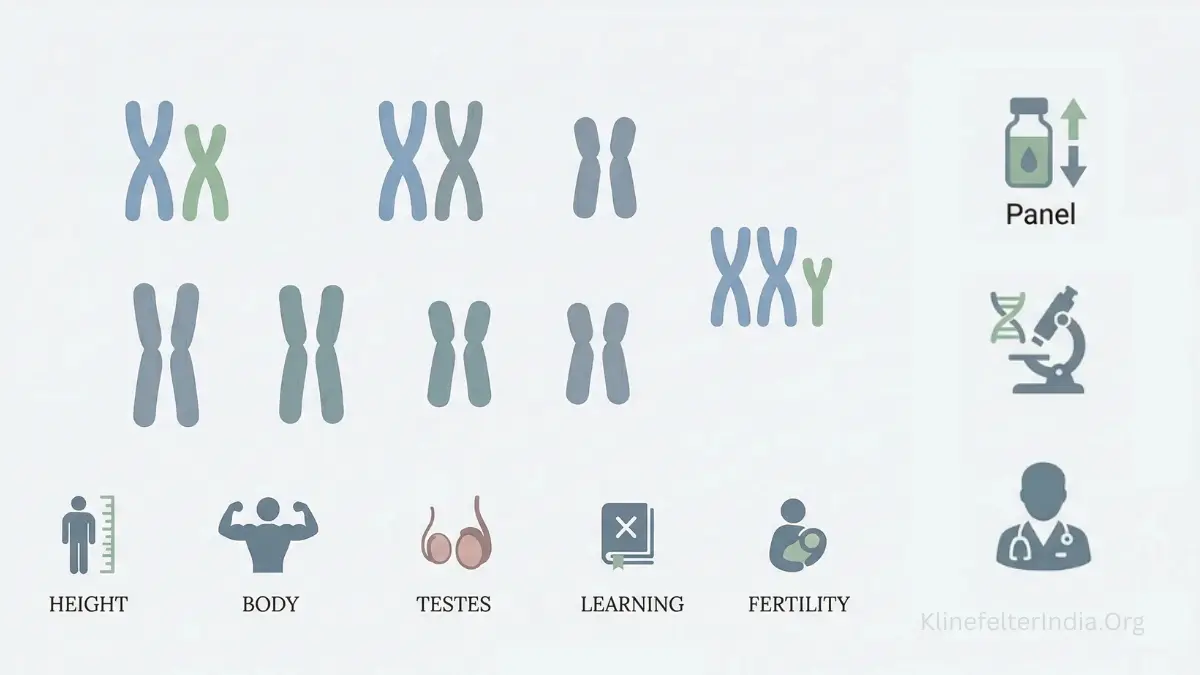
Key Takeaways: Physical Signs: Common indicators include taller height, smaller testes, and reduced muscle mass. Confirmatory Test: Diagnosis requires a karyotype blood test to map chromosomes. Early Planning: Timely diagnosis allows for better hormone monitoring and future fertility planning.Recognising Klinefelter Syndrome is not straightforward. Symptoms vary widely by age and severity, and many men do not realise they have the condition until adulthood - often when investigating fertility concerns. This article explains what symptoms to watch for at different life stages and walks you through the diagnosis process in India, including what tests are involved, what they cost, and what to expect at each step. Early diagnosis matters because it opens the door to effective treatment and significantly better long-term health outcomes. Why Klinefelter Syndrome Is So Often Missed Klinefelter Syndrome is one of the most underdiagnosed genetic conditions in the world. Despite affecting approximately 1 in 500 to 1,000 males[1], only around 5 to 10 percent of men with KS ever receive a confirmed diagnosis. In India, where routine genetic screening at birth is not standard practice and awareness among general physicians remains limited, the gap between those living with the condition and those who know about it is even wider. The reason diagnosis is so frequently missed comes down to how the condition presents. In childhood, a boy who is quiet, tall for his age, or struggles slightly with reading does not typically raise clinical concern. Symptoms are easily attributed to normal variation, and without a reason to test, most boys pass through childhood and adolescence without ever being investigated. The result is that most Indian men with Klinefelter Syndrome are diagnosed between the ages of 30 and 40, typically after discovering fertility difficulties and undergoing a semen analysis that reveals very low or absent sperm. This delayed diagnosis has real consequences. Starting testosterone replacement therapy in late adolescence or early adulthood leads to better bone density, more typical muscle development, and a meaningfully reduced risk of osteoporosis later in life[2]. For teenagers, earlier treatment can mean going through a more typical puberty experience, with significant benefits for mental health and social development. For men who want biological children, earlier diagnosis also matters because fertility preservation options such as sperm banking or micro-TESE tend to be more successful at younger ages[2]. If you recognise symptoms in yourself or your son, know that testing is straightforward and diagnosis opens the door to effective management. Klinefelter Syndrome Symptoms by Life Stage Symptoms of Klinefelter Syndrome change as you grow, and not every man with KS experiences all of them. There is wide variation in how the condition presents, and some men have very mild symptoms throughout their lives while others experience more pronounced effects. What follows is a guide to what is commonly seen at each stage - not a checklist of everything you should expect. Infancy and Early Childhood (0 to 5 years) In the earliest years, signs of Klinefelter Syndrome are subtle and easily overlooked. Some infants show reduced muscle tone, sometimes described as a floppy quality, and may reach motor milestones such as sitting, crawling, and walking slightly later than peers. A quieter temperament, early speech delays, and in some cases undescended testes or a smaller than typical penis may be present. The reality is that most boys are not diagnosed at this age. These signs are non-specific and commonly attributed to normal developmental variation, which is why infancy diagnoses are rare outside of prenatal testing. Childhood (6 to 12 years) As boys with Klinefelter Syndrome move through primary school years, a pattern sometimes begins to emerge. They are often taller than their classmates, particularly from around age eight onwards. Learning difficulties may become apparent - not intellectual disability, but specific challenges with reading comprehension, verbal expression, and executive functions like planning and organising. A quieter, shyer temperament is common, as is slightly less coordination than peers. Testes remain small and firm. These signs, taken individually, rarely prompt concern. Taken together and recognised by an informed parent or paediatrician, they can lead to earlier investigation. Adolescence (13 to 18 years) Adolescence is when Klinefelter Syndrome becomes more visible, and it is often the first point at which parents or doctors begin to investigate seriously. Puberty may be delayed or incomplete. Facial and body hair may be sparse compared to peers, the voice may not deepen fully, and muscle development may remain minimal despite regular physical activity. Around 50 percent of adolescent boys with KS develop some degree of gynecomastia - breast tissue growth[4] - which can range from barely noticeable to more prominent, and which carries significant emotional weight during an already difficult developmental period. Taller than average stature, longer limbs relative to the torso, narrower shoulders, and wider hips are also commonly seen. Testes typically remain at a prepubertal size. The social and emotional dimension at this stage is significant. Anxiety, particularly social anxiety, is more common in adolescent boys with KS, as are low self-esteem, body image concerns, depression, and a tendency to withdraw socially[2]. Many boys at this stage feel different from their peers without having any explanation for why. If KS is going to be diagnosed before adulthood, adolescence is typically when it happens - provided someone recognises the pattern. Adulthood (18 years and older) Most Indian men with Klinefelter Syndrome are diagnosed in adulthood, and infertility is the most common reason they seek investigation. After trying to conceive for twelve months or more without success, a semen analysis reveals very low sperm count or azoospermia - no sperm at all - which leads to genetic testing and a 47,XXY result[3]. Beyond fertility, adult men with KS typically experience a cluster of low testosterone symptoms. Chronic fatigue and low energy are among the most common complaints. Reduced libido, difficulty building or maintaining muscle mass, increased body fat particularly around the abdomen and chest, and poor concentration or mental fog are also frequently reported. Erectile dysfunction in men under forty, without an obvious cause, is worth investigating. Gynecomastia may develop if it was not present earlier. On the mental health side, depression and anxiety are significantly more common in men with KS than in the general population[2]. Many men describe a long-standing sense of feeling different or not quite right without being able to identify why - a feeling that often resolves considerably once a diagnosis is made and treatment begins. The Diagnosis Process in India Getting a confirmed Klinefelter Syndrome diagnosis in India typically involves four to five steps, from your first specialist appointment to a definitive result. The full process takes two to four weeks and costs between ₹7,500 and ₹13,500 at a private facility, less at a government hospital. Step 1 - See an Endocrinologist The right first step is an endocrinologist, not a general physician. Endocrinologists specialise in hormone disorders and are significantly more likely to recognise the KS pattern and order the right tests. At your first appointment, it helps to come prepared with a written summary of your symptoms and how long you have experienced them, any fertility concerns, and questions you want answered. Consultation fees at private clinics in major Indian cities typically range from ₹1,000 to ₹2,500. Step 2 - Physical Examination Your endocrinologist will carry out a physical examination that includes checking testicular size using an orchidometer, assessing for gynecomastia, reviewing body proportions including arm span relative to height, and evaluating secondary sexual characteristics such as facial and body hair distribution. This examination, combined with your symptom history, helps determine whether hormone testing and genetic investigation are warranted. Step 3 - Hormone Panel The next step is a fasting blood test, ideally taken in the morning when testosterone levels are at their highest. The panel will typically include total and free testosterone, LH (luteinising hormone), FSH (follicle-stimulating hormone), and estradiol. In Klinefelter Syndrome, the characteristic pattern is low testosterone combined with elevated LH and FSH - a combination known as primary hypogonadism[4]. This hormonal picture strongly suggests KS but is not on its own definitive. Results are usually available within 24 to 48 hours. Cost at a private lab ranges from ₹1,500 to ₹3,000. Step 4 - Karyotype Test The karyotype test is the only investigation that definitively diagnoses Klinefelter Syndrome[3]. A blood sample is sent to a genetics laboratory where technicians examine and photograph the chromosomes under a microscope. The result will show one of four possibilities: 47,XXY indicating classic Klinefelter Syndrome, 46,XY/47,XXY indicating mosaic Klinefelter Syndrome, a rare variant such as 48,XXXY or 48,XXYY, or a normal 46,XY result meaning KS is not present. Results take between seven and fourteen days, occasionally up to three weeks. Karyotype testing costs vary considerably depending on where you go. Government hospitals typically charge ₹3,000 to ₹5,000. Private labs such as Thyrocare and SRL charge ₹5,000 to ₹8,000. Premium private hospitals may charge ₹8,000 to ₹12,000. For most men, a private lab offers a reasonable balance of cost and turnaround time. ### Step 5 - Follow-up Tests After Diagnosis Once a KS diagnosis is confirmed, your endocrinologist will typically order a bone density scan (DEXA) to assess your bone health, a semen analysis if fertility is a concern, and a metabolic panel covering blood sugar, cholesterol, and liver function. A DEXA scan costs approximately ₹2,000 to ₹4,000, a semen analysis ₹500 to ₹1,500, and a metabolic panel ₹800 to ₹2,000. Taking everything together, the total cost of a complete Klinefelter Syndrome diagnosis in India - from first consultation through to karyotype result - runs from approximately ₹7,500 to ₹13,500 at a private facility. Government hospital pathways can bring this down considerably, though waiting times for genetics lab results may be longer. When to Get Tested Knowing when to seek investigation is not always obvious, because no single symptom on its own is sufficient to diagnose Klinefelter Syndrome. What matters is recognising combinations of signs that together suggest it is worth asking an endocrinologist to investigate further. For adult men, the clearest trigger is fertility difficulty. If you have been trying to conceive for twelve months or more without success, or if a semen analysis has already shown very low or absent sperm, genetic testing is strongly warranted. Beyond fertility, it is worth getting tested if you have chronically low energy that sleep does not resolve, persistent difficulty building muscle despite regular exercise, low libido, or erectile dysfunction under the age of forty without an obvious cause. Physical signs such as very small testes, significant gynecomastia, or notably sparse facial and body hair alongside other symptoms should also prompt investigation. For parents, the signs to watch for in a son are different. If a boy shows no signs of puberty by age fourteen or fifteen, if his testes have not grown during puberty, or if he develops breast tissue during adolescence, these are reasons to consult a paediatric endocrinologist. A pattern of being considerably taller than peers combined with learning difficulties and social withdrawal is also worth discussing with a specialist, even if no single element seems alarming on its own. In terms of who to see: an endocrinologist is the right first choice for most men. If your primary concern is fertility, an andrologist is equally appropriate as a starting point. After a diagnosis is confirmed, a genetic counsellor can help you understand the implications fully and answer questions about family planning. Common Questions Can I have Klinefelter Syndrome without experiencing all the symptoms? Yes, and this is more common than many people realise. Symptom severity varies widely between individuals. Some men have very mild presentations with only low testosterone and fertility concerns, while others experience a broader range of effects. Men with mosaic Klinefelter Syndrome, where only some cells carry the 47,XXY pattern, often have milder symptoms overall. The only reliable way to know whether you have KS is through karyotype testing, regardless of how many or how few symptoms you have. What if my testosterone level comes back normal? It is possible, particularly in younger men and in those with mosaic KS, to have testosterone levels within or close to the normal range[5]. This does not rule out Klinefelter Syndrome. If you have other indicators - small testes, infertility, the characteristic physical features - it is worth requesting a karyotype test even when the hormone panel looks relatively normal. Testosterone levels in KS can also decline over time, so a result that appears normal in your twenties may not reflect your hormone status a decade later. How accurate is the karyotype test? The karyotype test is extremely accurate because it directly visualises your chromosomes rather than inferring anything indirectly. It is the gold standard for KS diagnosis for this reason. The only scenario where it may not capture the full picture is very low-level mosaicism, where only a small proportion of cells carry the 47,XXY pattern - but this is uncommon. For the vast majority of men, a single blood karyotype provides a definitive answer. What to Do Next If you recognise symptoms in yourself or your son, the process from here is straightforward. You do not need a referral or a confirmed diagnosis before taking the first step. Start by booking an appointment with an endocrinologist in your city. You do not need to arrive with a diagnosis in hand - bring a written note of your symptoms, how long you have had them, and any fertility concerns if relevant. The Finding a KS Doctor in India guide has practical advice on identifying the right specialist and what to ask at your first appointment. From there, your endocrinologist will guide the testing process. Expect a hormone panel first, followed by a karyotype test if the results suggest KS. The full process from first appointment to confirmed diagnosis typically takes two to four weeks. Budget approximately ₹7,500 to ₹13,500 for the complete diagnostic workup at a private facility. The Tests and Lab Costs in India guide has a full breakdown of what each test involves and where to get them done across major Indian cities. Once you have a diagnosis, the next step is understanding your treatment options and what the path forward looks like. The What is Klinefelter Syndrome guide gives you the full picture of the condition if you are newly diagnosed. The Complete TRT Guide for India covers everything about testosterone replacement therapy, and the First 90 Days After Diagnosis guide gives you a practical week-by-week roadmap for the period immediately after diagnosis. A diagnosis of Klinefelter Syndrome is not bad news in the way it might first feel. It is an explanation, and with that explanation comes access to treatment that works. Most men who are properly diagnosed and treated go on to live full, healthy lives. The sooner you know, the sooner that process can begin.
- Editor
- 17 Feb, 2026
What is Klinefelter Syndrome?
Key Takeaways: Genetic Variation: Klinefelter Syndrome (47,XXY) is a natural chromosomal variation in males, not a disease. Prevalence: It affects roughly 1 in 600 males, with an estimated 1 million+ individuals in India. Health Outlook: With proper hormone care, men with KS live active, healthy, and normal lives.If you have just been diagnosed with Klinefelter Syndrome, you are probably looking for clear, honest answers. This article explains what Klinefelter Syndrome is in plain language - what causes it, how it affects your body, and what treatment looks like in India. By the end, you will have a solid understanding of your diagnosis and a clear sense of what to do next. What is Klinefelter Syndrome? Klinefelter Syndrome is a genetic condition where males are born with an extra X chromosome. The typical male chromosome pattern is 46,XY - 46 chromosomes in total, with one X and one Y. Men with Klinefelter Syndrome have 47,XXY - one extra X chromosome in every cell of their body. The condition was first described by American physician Dr. Harry Klinefelter in 1942, which is how it got its name. It is worth being clear about one thing: Klinefelter Syndrome is not a disease. It is a chromosomal variation you were born with. Having an extra X chromosome does not change the fact that you are male. You have a Y chromosome, male anatomy, and a male identity. Your genetic blueprint is simply a little different from most men. Klinefelter Syndrome is one of the most common chromosomal conditions in the world, affecting approximately 1 in 500 to 1,000 males[2]. In India, that translates to an estimated 700,000 to 1,400,000 men living with the condition right now. The vast majority have no idea, because only around 5 to 10 percent of men with Klinefelter Syndrome are ever diagnosed[2]. Many live their entire lives without knowing, because symptoms can be mild or easy to overlook. The condition is manageable with proper treatment, and most men with Klinefelter Syndrome live full, healthy lives. It is not life-threatening, and you are far from alone. What Causes Klinefelter Syndrome? Klinefelter Syndrome is caused by a random genetic event that occurs during conception. When sperm and eggs are formed, chromosomes are supposed to separate evenly. Sometimes this process does not work perfectly - a mistake called nondisjunction occurs, and an extra X chromosome ends up in either the sperm or the egg[1]. When that sperm or egg combines at conception, the result is an embryo with XXY chromosomes instead of XY. This is entirely random. It is not something anyone could have prevented or predicted, and it does not run in families[1]. Your children will not have an increased risk of Klinefelter Syndrome. Nothing about your lifestyle, your health, or your choices caused this. Nothing your parents did or did not do during pregnancy caused it either. The only known factor associated with a slightly higher occurrence is maternal age over 35[3], though the condition affects men born to mothers of all ages, across all ethnicities, nationalities, and socioeconomic backgrounds equally. There was nothing that could have been done differently. This is simply one of nature's variations that happens randomly during human development. ## How Does Klinefelter Syndrome Affect You? The primary effect of Klinefelter Syndrome is lower testosterone production. The extra X chromosome affects how the testes develop and function, which means they produce less testosterone than is typical[1]. This lower testosterone level is the root cause of most symptoms you may experience. Physical effects vary considerably from one man to the next. Some men have very mild symptoms they barely notice. Others experience more pronounced changes. Common effects include lower energy and fatigue, reduced muscle mass, increased body fat particularly around the waist and chest, sparse or patchy facial and body hair, and smaller testes. Around 50 percent of men with Klinefelter Syndrome develop some degree of gynecomastia - breast tissue growth - which can range from barely noticeable to more significant[4]. Many men with the condition are also taller than average, often with longer arms and legs relative to their torso. Fertility is the other major area of concern. Most men with Klinefelter Syndrome produce very little sperm or none at all naturally, because the extra X chromosome disrupts normal sperm production in the testes[1]. This does not mean fatherhood is impossible. Medical options exist, including micro-TESE - a surgical procedure that can retrieve sperm directly from the testes[2] - as well as donor sperm and adoption. Many men with Klinefelter Syndrome go on to have families. There is a detailed Fertility Options Guide on this site that walks through every available path, including costs and success rates in India. It is also worth knowing about a variant called mosaic Klinefelter Syndrome, where only some cells carry the XXY pattern while others have the typical XY pattern. Men with mosaic KS often experience milder symptoms and sometimes have better fertility potential than those with the classic form[5]. Many men are not diagnosed until adulthood - often during investigations for infertility - precisely because their symptoms were subtle enough not to raise concern earlier. If that is your situation, it is more common than you might think. The encouraging reality is that most of these effects are treatable. With proper testosterone replacement therapy, the majority of men with Klinefelter Syndrome see meaningful improvements in energy, muscle mass, body composition, mood, and overall quality of life. For a detailed breakdown of symptoms by life stage and how they present in Indian men, see the Symptoms and Diagnosis Guide. Treatment for Klinefelter Syndrome in India The primary treatment for Klinefelter Syndrome is Testosterone Replacement Therapy, commonly called TRT. Since the core issue is lower testosterone production, replacing that testosterone addresses most symptoms effectively. Most men who start TRT report meaningful improvements in energy levels, muscle mass and strength, bone density, mood and mental clarity, body composition, and sexual function[1]. These are not minor quality-of-life adjustments. For many men, starting TRT is the point at which they begin to feel genuinely well for the first time. The good news for Indian men is that TRT is both widely available and affordable here. Injectable testosterone is the most commonly used form in India and costs approximately ₹500 to ₹800 per month. It is administered every two to three weeks, either by a doctor or self-administered at home once you are comfortable with the process. Testosterone gel is also available and offers the convenience of daily application without injections, though it costs considerably more at around ₹2,000 to ₹3,000 per month. Patches are another option, though less commonly prescribed in India. Alongside the medication itself, you will need monitoring blood tests twice a year to check your testosterone levels and overall health. These typically cost ₹2,000 to ₹4,000 per test at a private lab, and less at government facilities. Including medication, monitoring, and doctor consultations, most men in India manage their Klinefelter Syndrome for approximately ₹12,000 to ₹25,000 per year on injectable testosterone. If you choose gel, expect annual costs closer to ₹25,000 to ₹35,000. TRT is managed by an endocrinologist - a hormone specialist - not a general physician. If you have not yet seen one, finding the right doctor is your most important first step. The Finding a KS Doctor in India guide covers what to look for and where to start in major Indian cities. Beyond TRT, other treatments may be relevant depending on your individual situation. If gynecomastia is causing significant physical or psychological discomfort, surgical removal is an option available at most large private hospitals in India. Bone health support through Vitamin D, calcium, and weight-bearing exercise is recommended for most men with the condition, as low testosterone over time can affect bone density[1]. Fertility treatment is a separate pathway that requires its own planning and specialist involvement. And if the diagnosis has brought up anxiety, low mood, or adjustment difficulties - which is entirely normal - speaking to a psychologist or counsellor can make a significant difference. Mental health support remains underutilised in India, but it is available in most cities and increasingly online. The long-term outlook with treatment is straightforward. With proper testosterone replacement and regular monitoring, most men with Klinefelter Syndrome maintain good health, live normal lifespans, and lead full lives - in their careers, their relationships, and their families. This is one of the more manageable hormonal conditions, and treatment in India is both accessible and effective. For a full breakdown of every TRT option available in India, how to start treatment, what monitoring involves, and how to manage side effects, see the Complete TRT Guide for India. Common Questions Can Klinefelter Syndrome be cured? There is no cure for Klinefelter Syndrome in the sense that the extra X chromosome is present in every cell of your body from conception and cannot be removed or changed. But saying there is no cure is not the same as saying you are stuck with symptoms. The symptoms are highly treatable. Testosterone replacement therapy addresses the vast majority of issues that men with Klinefelter Syndrome face. With treatment, most men feel genuinely well - good energy, normal muscle mass, healthy mood, active sex life. Think of it this way: someone with type 1 diabetes cannot cure their pancreas, but with insulin they live a completely normal life. The same logic applies here. Treatment does not fix the chromosome, but it addresses what the chromosome affects. Can I live a normal life? Yes. With testosterone replacement therapy, the vast majority of men with Klinefelter Syndrome maintain normal energy levels, pursue any career they choose, have relationships, get married, have children through various options, stay physically active, and enjoy good quality of life. Klinefelter Syndrome is one part of who you are. It is not your whole identity, and it does not define what you are capable of. Will I be able to have children? Natural conception is uncommon for men with Klinefelter Syndrome because most produce very little or no sperm naturally. However, this does not mean fatherhood is out of reach. A surgical procedure called micro-TESE can retrieve sperm directly from the testes in around 30 to 50 percent of cases[2], which can then be used with IVF. Donor sperm and adoption are also valid paths that many men with KS choose. The Fertility Options Guide covers every available route in detail, including costs and success rates at Indian fertility clinics. Is this my fault - or my parents' fault? No. Klinefelter Syndrome is caused by a random chromosomal event during conception that no one could have predicted or prevented. Nothing you did caused it. Nothing your parents did caused it. It is not inherited, it does not run in families, and there is no lifestyle factor, dietary choice, or health decision that leads to it. It is one of nature's random variations, and it happens across all ethnicities, backgrounds, and family histories equally. For answers to more detailed questions about treatment, costs, finding a doctor, insurance, and fertility specifics, see the Klinefelter Syndrome FAQ. What to Do Next If you have just been diagnosed, the most important thing to know is that you do not need to figure everything out today. Here are the immediate steps that matter most. Start by finding an endocrinologist - a hormone specialist - in your city. This is the doctor who will manage your Klinefelter Syndrome long term. A general physician can refer you, or you can look for one directly at a large private hospital or government medical college in your area. The Finding a KS Doctor in India guide has practical advice on what to look for and what questions to ask at your first appointment. Once you have an appointment booked, your endocrinologist will order baseline blood tests to check your testosterone and hormone levels, along with a general metabolic panel. Understanding what these tests measure and what to expect from the process will help you feel more prepared. The Tests and Lab Costs in India guide covers exactly this, including typical costs at private and government labs across Indian cities. From there, take some time to understand your treatment options before your first consultation. Reading the Complete TRT Guide for India and the Fertility Options Guide before you see your doctor means you can ask better questions and make more informed decisions. Knowledge genuinely reduces anxiety here. Most men see an endocrinologist within two to four weeks of diagnosis and begin treatment within two to three months if it is indicated. There is no rush. Take the time you need to process the information and move at a pace that feels right for you.